

Bordeaux, France
Carmes de Rieussec 2016
Château RieussecS$62
The Wine Monk
You must be of legal drinking age to enter The Wine Monk. Please confirm your age to continue.
You must be 18 years or older to enter The Wine Monk. We look forward to welcoming you when you are.
Please drink responsibly. The sale & supply of alcohol is to persons aged 18 and over.
Complimentary delivery on orders over SGD 100 · Hand-picked French & Italian wines, chosen by The Wine Monk since 2014
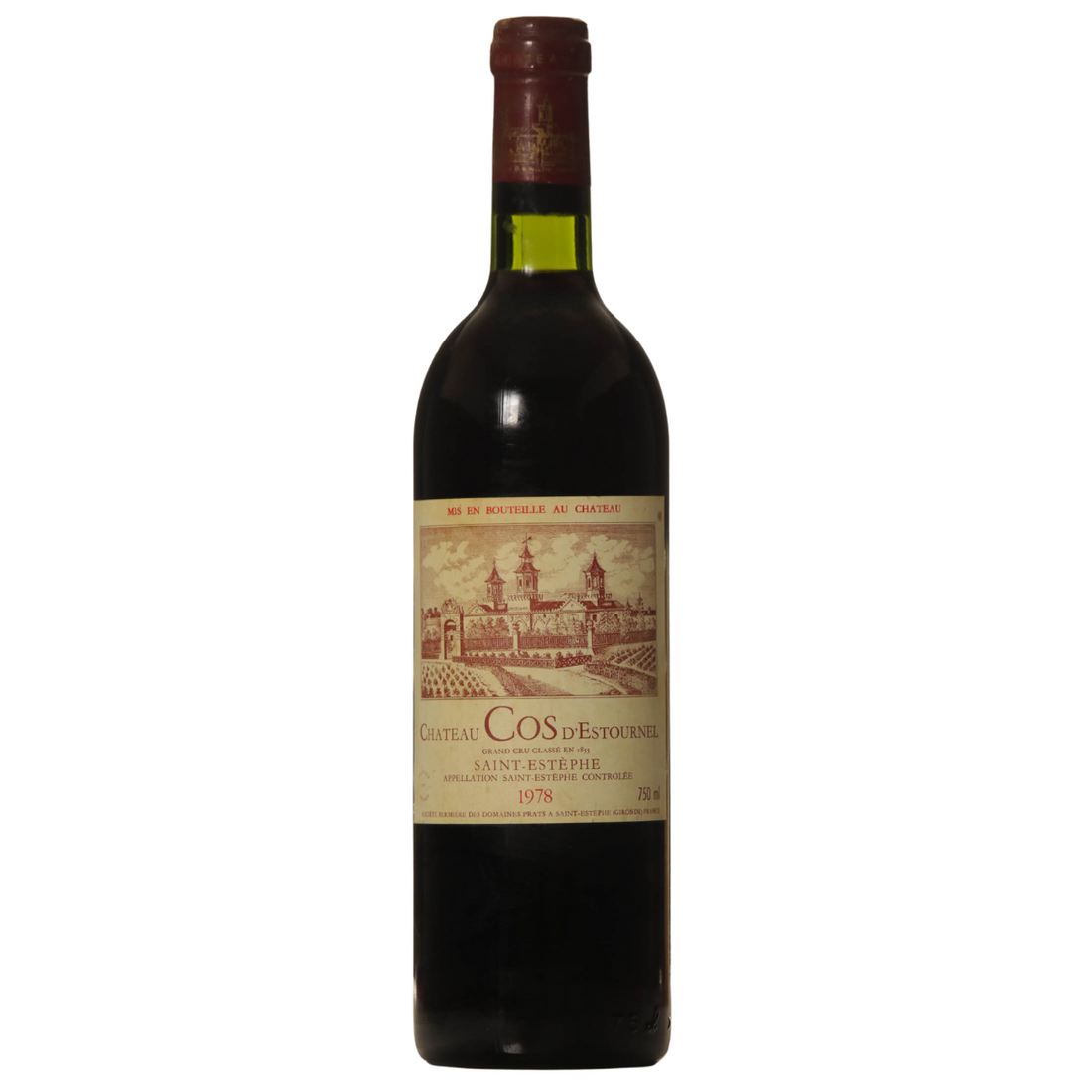
Château Cos d'Estournel · Bordeaux
Only 3 left
Questions about this bottle? WhatsApp Email us
Château Cos d’Estournel in St-Estèphe is a landmark in more than one way. The extraordinary pagoda-like edifice, complete with gargoyles and carved door from a palace in Zanzibar, makes a striking statement in the bleak Médocain landscape. The wines, too, are distinctive. A mix of elegance and power with a slightly exotic edge, they are among the best that can be found in Bordeaux today.
Cos in the old Gascon tongue means ‘hill of pebbles’ and that is where the vines are planted. About 20m above the marshy lowland on the opposite side of the tiny Jalle de Breuil (stream) from Château Lafite Rothschild, a mound of quaternary gravel atop a limestone bedrock provides the ideal terroir for the 91ha (hectare) vineyard. The aspect is south, southeast facing, the free-draining gravel ideal for Cabernet Sauvignon (60%); on the slopes where the clay is more prominent, Merlot (40%) can be readily adapted.
Louis Gaspard d’Estournel may have been ignorant of the physical properties of the land but he realised good wines could be made from it. From 1811 he vinified grapes from the few vines he had inherited at Cos separately from other parcels he owned, and started to expand the vineyard. Cos was his work and vision, but he died in 1853, two years before his achievements were crowned with second growth status in the 1855 classification.
In the interim he more than contributed to the reputation of the wine. Quality was one of his mantras, and another reason for Cos’ rapid rise in estime. His fascination with India led to the sale of the wine on the subcontinent, the construction of the pagoda-like cellars and the presentation of a mature wine labelled ‘Retour des Indes’ (Returned from India) for barrels of Cos that made the round trip by boat to and from Bombay. His investments eventually led to crippling debts and he was forced to sell Cos to London bankers Martyns in 1852.
Repeated sale and purchase followed with the Basque Errazu family acquiring the property in 1869, the Charmolües, owners of Château Montrose, in 1889 and Fernand Ginestet in 1917. Ginestet’s grandson, Bruno Prats, managed the estate from 1970 until it was sold to the Merlaut family and Argentinian investors in 1998. Two years later it was acquired by the present owner, French food manufacturer Michel Reybier.
The 28 years of astute management under the tutelage of Bruno Prats has been crucial to the continuing success of Château Cos d’Estournel. Prats, a qualified agronomist, realised early on that investment in the vineyard held the key to the quality of the wine.
93/100, Harvey Steiman, Wine Spectator
Praise from Neal Martin's Wine Journal: "Tasted at the Cos d’Estournel dinner at St. John. A deep brick core with a tawny rim. The nose is light, but has character with mulberry, iodine, warm bricks plus a faint tinge of tinned mushroom that turns more beetroot with aeration. The palate is medium-bodied, fully mature with relative light tannins. Conservative, but not as austere as other ’78 northern Medocs." Neal Martin, (11/2009)


