

Margaux, Bordeaux, France
Alter Ego de Palmer 2009, Chateau Palmer
Chateau PalmerS$235
Complimentary delivery on orders over SGD 100 · Hand-picked French & Italian wines, chosen by The Wine Monk since 2014
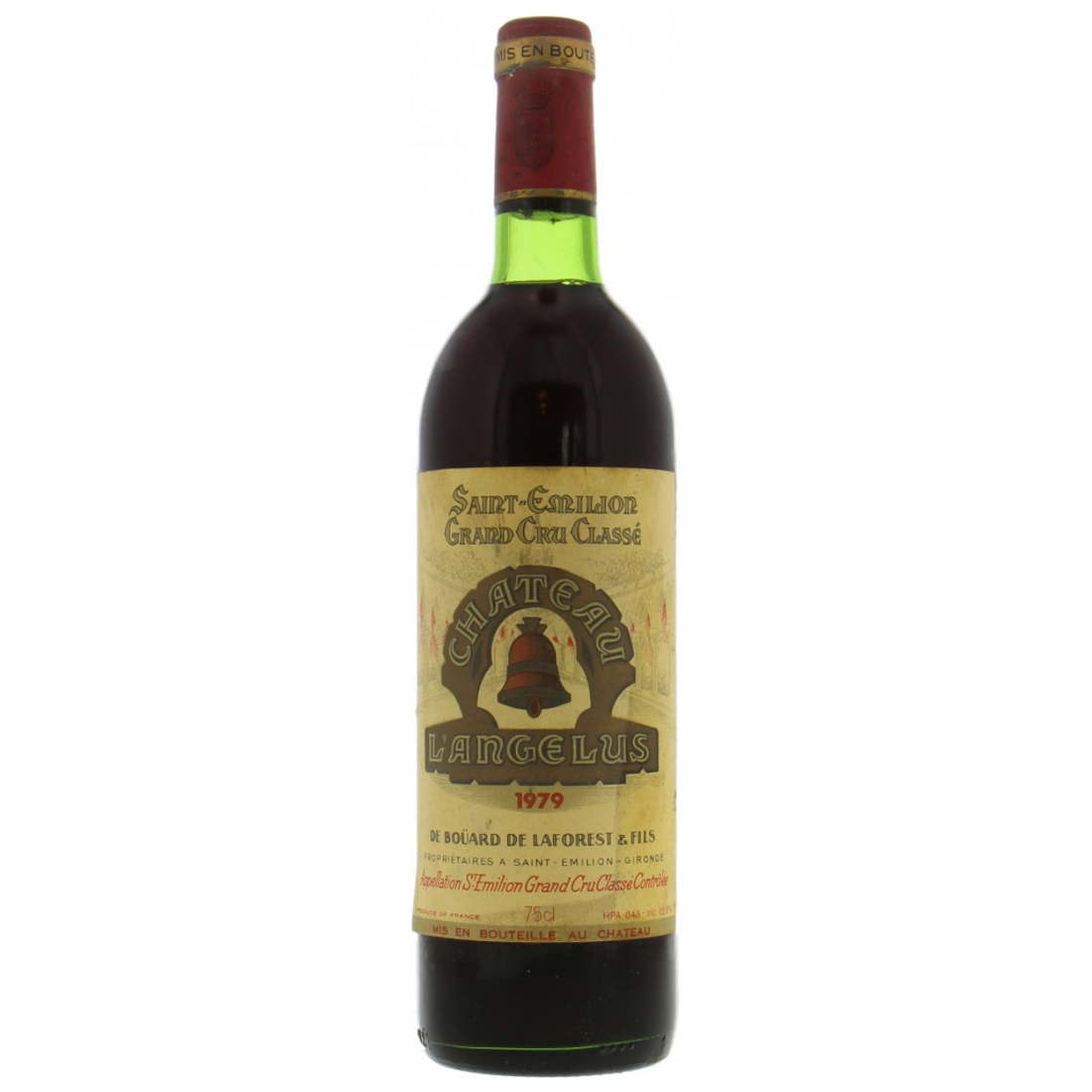
Chateau Angelus
Only 1 left
Questions about this bottle? WhatsApp Email us
Please refer to this fantastic youtube video from The Wine Archive on a recent tasting of The Angelus.
https://www.youtube.com/watch?v=1UdGM2Ihjmo
Chateau Angelus: Producer Profile (Courtesy: Decanter.com)
With high-profile associations including a high-grossing film franchise and various Michelin-starred restaurants, Château Angélus clearly enjoys being in the limelight. But what’s the story behind this acclaimed St-Emilion estate and its distinctive label?
Moneypenny, James Bond, Q. Not a bad trio for your wine to share the screen with in its latest cameo. I’ll try not to give too many spoilers if you haven’t yet seen No Time To Die, but I don’t think it gives too much away to say that Bond can’t resist swiping two generous glasses of Château Angélus (2005, although you don’t see the vintage on screen) for himself and Moneypenny from a bottle that Q had carefully opened for his date later that night.
This is the third Bond film in which Angélus has made an appearance; the 1982 was drunk by Vesper Lynd and Bond on the train to Montenegro in Casino Royale, while the 2005 vintage can be spotted in Spectre.
The association with Bond has taken the already-famous label – pale yellow, distinctive black writing surrounding a golden bell – to an audience of billions worldwide. So far, so clever product placement.
But the bell, as with so much of the story of this wine, is not just smart marketing but an authentic symbol of the roots and location of the winery itself. It has been on every Angélus label since the 1945 vintage, and is a reference to the bells that you can hear from this spot – on the northwestern edges of St-Emilion. Here, in the biggest of the communes that surround the town, to its west, there are records of vines growing as far back as the 12th century.
The vines are on south-facing slopes that follow a natural amphitheatre shape, from where you can hear the ringing bells of three neighbouring church towers – belonging to the Mazerat chapel, St-Martin-de-Mazerat church and the main St-Emilion church.
Even the name Angélus is a reference to these bells ringing out the call to the Angelus prayer, which used to punctuate the working day in the morning, noon and evening. There are very few family-owned estates in Bordeaux that have been in the same hands since before the French Revolution. Still fewer that have gone on to become classified châteaux in Bordeaux rankings – on either bank, Left or Right.
And yet Château Angélus has been owned by the Bouärd de Laforest family since 1782, when Jean de Bouärd de Laforest bought a plot of vines in St-Martin-de-Mazerat. In 1795, Jean’s daughter Catherine married Charles Souffrain de Lavergne, whose family had a plot of vines in the same village, and the couple moved to Mazerat.
The estate at the time was known as Château Mazerat, and continued to be known under that name until the early 20th century, when a neighbouring property, Clos de l’Angélus, was bought by Maurice de Bouärd de Laforest, who had inherited the Mazerat estate. The new name was used as an alternative to Mazerat at first, then for the whole estate from 1945.
Today run by eighth-generation Stéphanie de Bouärd-Rivoal, Angélus has been a premier grand cru classé A of the St-Emilion ranking since the 2012 vintage.
It’s a property where things have moved fast in recent years – because of its promotion in the ranking, but also due to a host of new viticultural techniques, and stunning new cellars that were built by craftsmen known as the Compagnons du Tour de France, using techniques that date back to the Middle Ages.
It’s also seen a significant expansion in its footprint of vines, today standing at 52ha. This makes Angélus one of the biggest properties in the appellation, although at its heart are the 27ha of classified vines surrounding the main château building.
It was one of the first estates in St-Emilion to use a high percentage of Cabernet Franc, dating right back to the 1920s, for the rather lovely reason that owner Maurice de Bouärd de Laforest’s wife was called Elizabeth Bouchet, and Bouchet is an old French synonym for Cabernet Franc. To honour her, Maurice upped plantings of the grape to 45% of total plantings in the 1920s. Today, its wines continue to have some of the highest proportions of Cabernet Franc in St-Emilion, bringing a distinctive sculpted, floral perfume and fresh structure to the fleshy, creamy and welcoming black fruits that are such a signature of Angélus.


